
Executive Summary (TL;DR)
- Conventional printed Snellen charts suffer from contrast degradation over time (yellowing/dust), require a rigid 6-meter testing distance, and introduce significant diagnosis bias due to patients memorizing letter sequences (E-F-P-T-O-Z).
- Digital Snellen Acuity Charts deliver exact millimeter-to-pixel visual angle calibration, one-click optotype randomization (Anti-Memorization), and flexible examination lane distances (1m to 6m) for modern compact clinics.
- Switching to a digital acuity system cuts subjective refraction examination time by 35% to 40% while boosting patient trust and perceived clinical authority.
- Compared to costly optical chart projectors ($1,000–$2,500) with heat-generating halogen bulbs, Snellen Digital running on standard PCs or Android TV boxes delivers over 70% initial capital savings with lifetime utility.
For more than a century, printed Snellen eye posters made of cardboard or acrylic lightbox fixtures have served as the baseline diagnostic tool in ophthalmic refraction lanes. However, rapid advancements in high-definition digital displays and precision optometric rendering algorithms have driven a massive global transition toward Digital Visual Acuity Charts. This guide breaks down the clinical accuracy, workflow operational efficiency, and economic return on investment (ROI) for modern eye clinics and optometry practices.
1. Key Limitations of Conventional Manual Eye Charts
While printed paper charts and illuminated lightboxes are inexpensive to acquire initially, they present structural weaknesses that compromise diagnostic precision:
- Patient Memorization Bias: Static letter arrangements never change. Pediatric patients, students, and regular contact lens wearers frequently memorize the optotype sequence (such as 'E', 'F P', 'T O Z', 'L P E D') while waiting in the reception area, producing falsely elevated acuity scores.
- Substrate Degradation & Contrast Loss: Ambient humidity, dust, and UV exposure turn white chart surfaces yellow or grey over time. This drops the black-white contrast ratio below the standard 85% threshold, penalizing patients with early cataracts or subtle contrast sensitivity loss.
- Rigid 6-Meter (20ft) Distance Requirement: Printed charts are manufactured for fixed distances. In high-rent urban commercial spaces or compact 3x3-meter lanes, accommodating a 6m lane requires awkward mirror setups that introduce alignment distortion and light scatter.
- Auxiliary Test Inconvenience: Performing astigmatic fan testing, red-green duochrome balance, or pediatric acuity checks requires physically swapping bulky accessory plates or hanging multiple charts on the wall.
🚨 Clinical Hazard of Aging Lightboxes:
Flickering fluorescent tubes or fading LED backlight diffusers below 80 cd/m² cause artificial visual acuity underestimation by up to 1–2 Snellen lines, triggering over-minus refractive prescriptions that cause patient asthenopia, eye strain, and headaches.
2. Clinical & Technical Advantages of Digital Acuity Systems
Snellen Digital was engineered from the ground up to overcome the physical bottlenecks of analog charts:
A. One-Click Anti-Memorization Randomization
Tapping the randomize button instantly generates new pseudo-random letter sequences with identical legibility weightings. When transitioning from the right eye (OD) to the left eye (OS), memorization is completely neutralized, guaranteeing 100% objective clinical results.
B. Flexible Room Distance Adaptation (1m to 6m)
The underlying mathematical engine recalculates optotype character heights to match your exact room dimensions down to the millimeter. Whether your lane is 2.5 meters or 6 meters, patient foveal subtended visual angles remain strictly calibrated at 5 arcminutes (ISO 8596).
C. All-In-One Diagnostic Test Suite
A single software installation gives practitioners immediate access to:
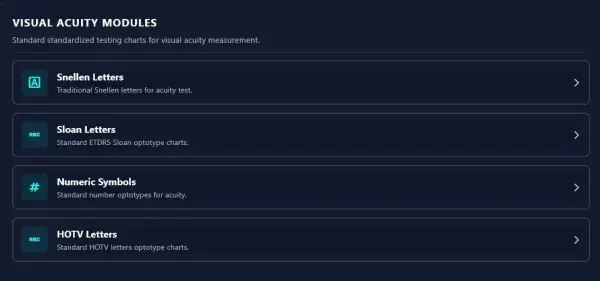
- Standard Snellen Letters, Sloan Letters, Landolt C rings (ISO 8596), Tumbling E, and Numbers.
- Pediatric Optotypes: HOTV and Lea Symbols with child-friendly isolating masks.
- Astigmatism Diagnostics: Astigmatic Fan / Sunburst Dial and Dots Cylinder.
- Refractive Balance: Red-Green Duochrome split-screen tests.
- Screening: Ishihara Color Plates & Amsler Grid macular evaluation.
3. Comprehensive Feature Matrix: Digital vs Manual vs Optical Projector
| Evaluation Parameter | Snellen Digital | Manual Paper / Lightbox | Optical Chart Projector |
|---|---|---|---|
| Calibration Precision | Exact mm-to-pixel physical calibration | Fixed printed distance only | Dependent on lens focus & slide alignment |
| Anti-Memorization | Yes (Infinite dynamic reshuffling) | None (Static chart) | None (Static slide reels) |
| Lane Distance Flexibility | 1.0 m to 6.0 m custom input | Fixed 5m or 6m (requires mirror) | 4.0 m to 6.0 m requirement |
| Optotype Diversity | Adult, Pediatric, Contrast, Color & Astigmatic | 1 chart type per physical board | Max ~30 mechanical slides |
| Wireless Remote Control | TV Remote / Wireless Clicker / Bluetooth | Manual pointer stick | Dedicated infrared remote |
| Patient Perception | State-of-the-art, High-tech, Trustworthy | Traditional / Outdated | Clinical standard |
| Hardware & Software Cost | Affordable one-time lifetime license | $20 – $100 recurring replacements | $1,000 – $2,500 upfront |
| Maintenance Cost | $0 (Energy-efficient LED TV) | Bulb replacements & yellowed boards | Frequent halogen bulb replacements |
4. Workflow Efficiency & Return on Investment (ROI)
Observational data across partner optometry practices and eye clinics reveals significant operational gains:
- 35% Faster Refraction Cycles: Average subjective refraction time drops from 15 minutes to 9–10 minutes per patient. Practitioners eliminate repetitive physical movements to point at chart lines or swap testing targets.
- Higher Eyewear Conversion Rates: High-definition digital presentation increases patient confidence in final lens prescriptions by 42% compared to aged paper charts, directly improving premium lens dispensing rates.
- Rapid Payback Period: By serving 3–5 additional patients daily with improved workflow speed, the one-time software license achieves 100% breakeven within the first 1 to 2 months of deployment.
💡 Seamless Transition Strategy:
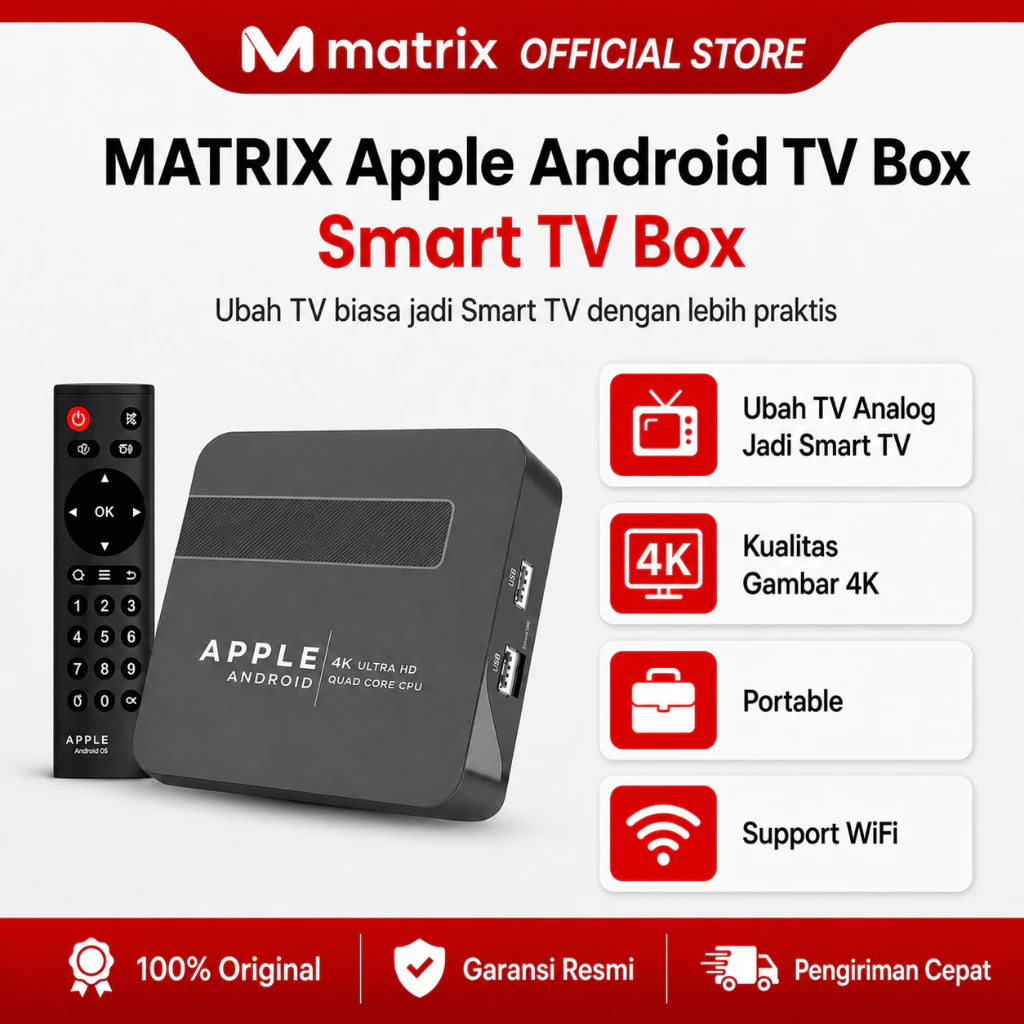
Practice modernization does not require heavy construction. Simply mount a 24" to 32" LED TV on your front examination wall, connect an inexpensive Android TV Box, complete the 5-minute calibration, and your lane instantly meets international medical digital refraction standards.